
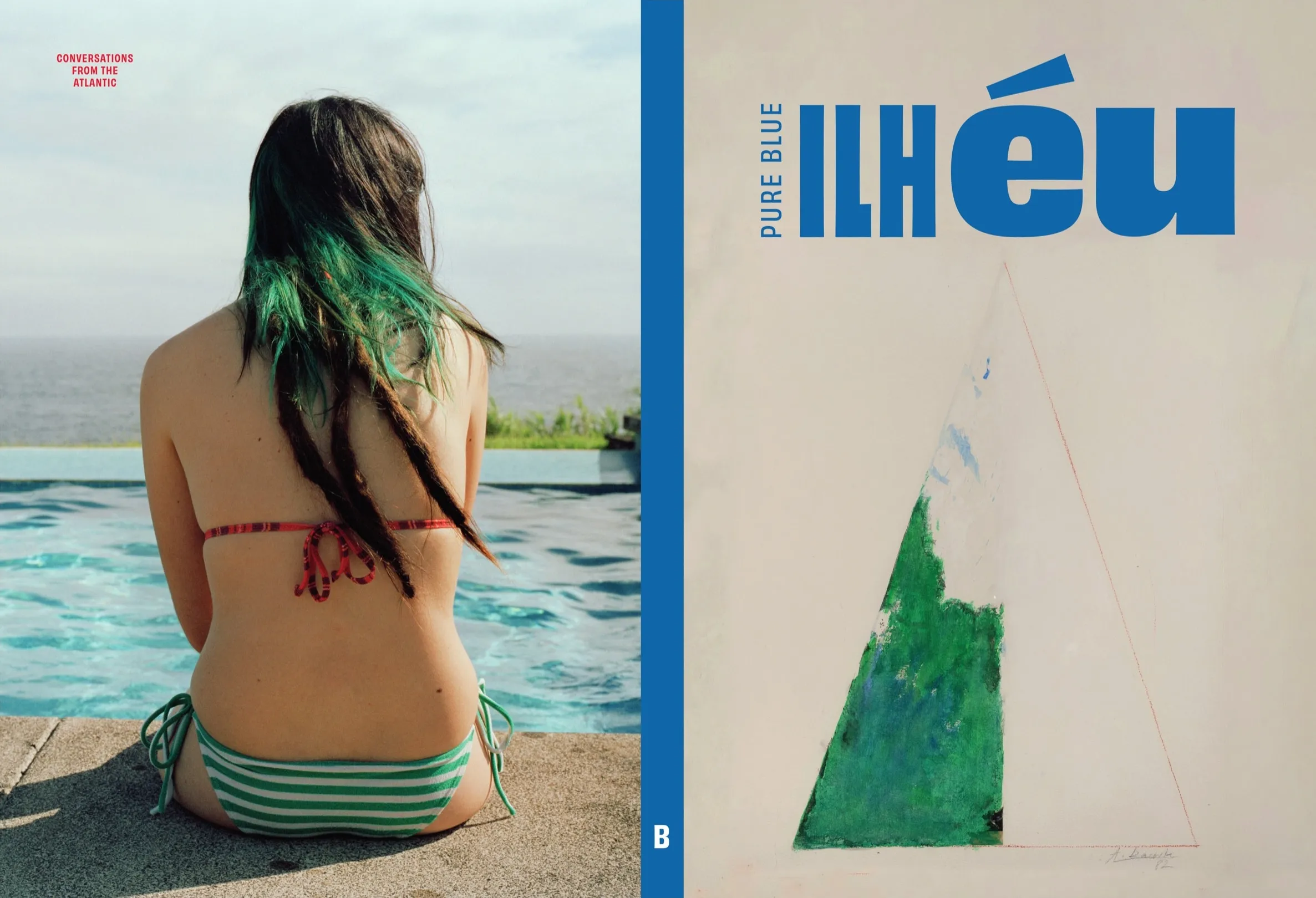
Issue B · Spring 2026
The Colour Blue
Conversations, prose, photography and design, produced and published on the Azorean island of Sao Miguel. 128 pages on Munken Pure, on the colour blue.
Buy This Issue
Issue B · Spring 2026
Editor’s Letter · pp. 6 – 7
And so I fell in love with a colour — in this case, the colour blue — as if falling under a spell, a spell I fought to stay under and get out from under, in turns.
Welcome to the second issue of Ilhéu — a magazine of conversations, prose, photography and design, produced and published on the Azorean island of São Miguel. The people who make this magazine run on the sun, the wind and the rain of the Atlantic, and we do this work for everyone who loves beautiful stories, images and words.
The theme of this second issue is the colour blue, inspired — of course — by the inescapable ocean which shapes the days and the minds of all who live in the Azores. As soon as we declared Ilhéu’s search for Pure Blue, I realised that blue was in fact the least pure of all the colours. The sun is almost always yellow, the moon almost always white, but the view of the sea and the sky from my bedroom window is in constant flux. The hues change moment by moment: muddying, lightening, streaked with pinks and greens and golds, mutable, moody, shimmeringly fickle. And then there are all the different meanings of blue, perhaps the only colour which contains so much emotion, so much history, so much art.
It was the English who began to use ‘blue’ to mean depressed or melancholy in the late 17th century. Having the ‘blue devils’ meant a person had been overwhelmed with bad spirits — bedevilled by their own feelings. By the 1800s, the term was adopted by slaves in the American South to mean sorrow, trouble, a burdened heart. This expression merged with negro spirituals and field-work songs to create the form of music we now call ‘the blues’, a style which, until today, represents suffering, endurance, struggle and strife. In the words of the great bluesman Robert Johnson: ‘The blues is a low-down achin’ heart disease’. And there is another, seedier side to the colour: for centuries, blue jokes and blue stories meant something sexual or out-of-bounds. In the 20th century this developed into the notion of blue movies as pornographic or risqué. And in this way the history of blue gives us a colour and much more than that. It is a word which straddles and symbolises our unacceptable desires, as well as all our soul endures.
This issue on Pure Blue is made up of images, conversations, maps, prose fiction and a comic strip. Sandra Rocha and Marco Costa’s photographs, featured between the stories, illuminate blue through two different Azorean lenses. The bright saturated waves of Costa’s book Atlântico 744 celebrate the often thankless, sometimes ecstatic but always blue business of being a surfer in São Miguel. The washed-out sea around Rocha’s misty Terceira is the mild blue of homesickness, taken from her book Anticyclone, portraits of family life upon a damp, Atlantic island, taken on trips back home. Then we have our five conversations which all investigate blue in their own particular ways — although none of them are, admittedly, very pure at all. Sometimes the connection to blue was obvious — for example, in the story of the new Azorean marine park ‘Blue Azores’. Other stories were more questionable in their relation to blue. Is a grand architectural masterpiece of a swimming pool, abandoned before being opened in the remotest corner of the island, really something blue? The scrubby, dirty tiles are a pale turquoise, it is true. But perhaps it is the flagrant way in which the six-million-euro pool was left to ruin that is the most risqué, the most blue thing about this story. What about the starry Leïla Slimani and her conversation with local writer Maria Brandão? They both write about sex in graphic, violent ways. Is it enough to call this ‘blue’ writing or is there something more to their conversation? Writer’s block, it turns out, is the ultimate blues for these women. The viola da terra-player Romeu Bairos makes modern Azorean folk music — is this the blues? Film director Diogo Lima was suspicious of linking the history of African American music with local songs, but Romeu’s tales of gangsters’ heartbreak and woe upon this remote, isolated island won him over. Then there is our lead story, about the great Azorean painter António Dacosta, who moved to Paris and then stopped painting for thirty years, returning in great glory only at the age of 69. Is it correct to say he had the blues for three decades? Or perhaps those long years of little work, in which one of the few paintings he produced was a single blue canvas, could be called his blue period? It was with these kinds of questions that we slowly, haltingly, discovered the varied shades and meanings of blue, as well as the qualities that these very different conversations shared — values that united the people featured here and, in the end, looped back to those first early meanings of the blues.
Despite our breezy, summery cover, the conversations here all contain that ‘achin’ heart disease’ — from Leïla Slimani describing how she goes to bed for days when she can’t write, to Bernardo Brito e Abreu and Adriano Quintela describing how difficult it is to feel positive in the face of the ongoing rampant destruction of the ocean they are trying to rescue; or Arlete Alves da Silva remembering the little drawing of a skull, a thread and a pair of scissors, drawn for her by Dacosta when he knew he was dying, so shortly after he had returned with such assurance, with such depth, to painting. However, linking all the different types of pain expressed by the people we talk to in this issue is a sense of survival and a belief that there is value in the dark parts of our stories. And I think it is this particular combination of celebrating heartbreak whilst passing through it, holding on to the filigree of hope which lightens the black to something with blue dawn glimmers, that makes the idea of the blues so valuable and enduring. Ralph Ellison, a blues writer if ever there was one, puts it very well: ‘The blues is an impulse to keep the painful details and episodes of a brutal experience alive in one’s aching consciousness, to finger its jagged grain, and to transcend it, not by the consolation of philosophy but by squeezing from it a near-tragic, near-comic lyricism.’1
· · ·
Kathleen McCaul
Editor · February 2026
1Ralph Ellison, Shadow and Act (New York: Random House, 1964).
Inside This Issue
Five Conversations on Blue
Five investigations into the least pure of all the colours — from the Paris blues of the painter António Dacosta to the architectural ruin of a six-million-euro swimming pool, from Leïla Slimani on writer’s block to Romeu Bairos on the viola da terra, all the way down to the underwater stillness of the Azorean marine park.
In this section
- 01 · Art — Dacosta
- 02 · Writing — Slimani
- 03 · Music — Bairos
- 04 · Architecture — The Pool
- 05 · Environment — Blue Azores
Art · Conversation 01
pp. 12–25
Antonio Dacosta and His Paris Blues
With Urbano Resendes, Arlete Alves da Silva
Read the conversation →
Writing · Conversation 02
pp. 50–63
What’s the point trying to understand a soul?
With Maria Brandao, Leila Slimani
Read the conversation →
Music · Conversation 03
pp. 66–76
Azorean Blues
With Diogo Lima, Romeu Bairos
Read the conversation →
Architecture · Conversation 04
pp. 82–95
The Pool at the Edge of the World
With Ilheu Atelier, Jose Antonio Barbosa
Read the conversation →Environment · Conversation 05
pp. 100–111
Blue Azores
With Adriano Quintela, Bernardo Brito e Abreu
Read the conversation →Also in this issue
Maps, playlists & interludes
Threading between the conversations: a picture essay on Dacosta’s late period, two playlists curated to set the issue’s mood, a hand-drawn map of Azorean ruins, a comic strip from Ponta Delgada, and a short story by Kathleen McCaul. Interludes that hold the page between the louder voices.
In this section
- Picture Essay — Dacosta
- Playlist 01 — Opa Collective
- Map — Ruins of the Azores
- Playlist 02 — Azorean Blues
- Comic Strip — Sara Azad
- Prose — Kathleen McCaul
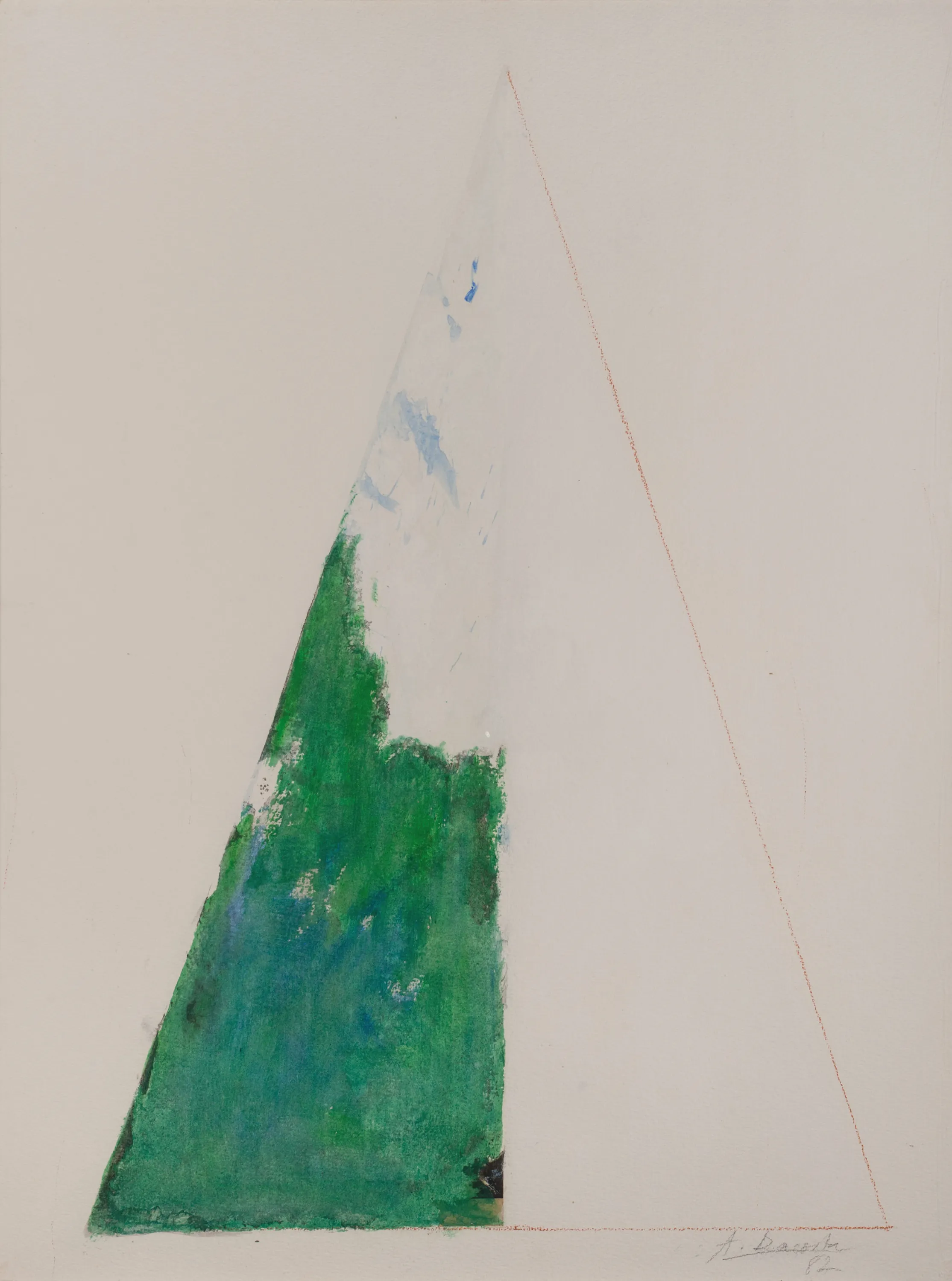
Picture Essay · pp. 28–49
The Blues of Antonio Dacosta
By Urbano Resendes
In the print edition
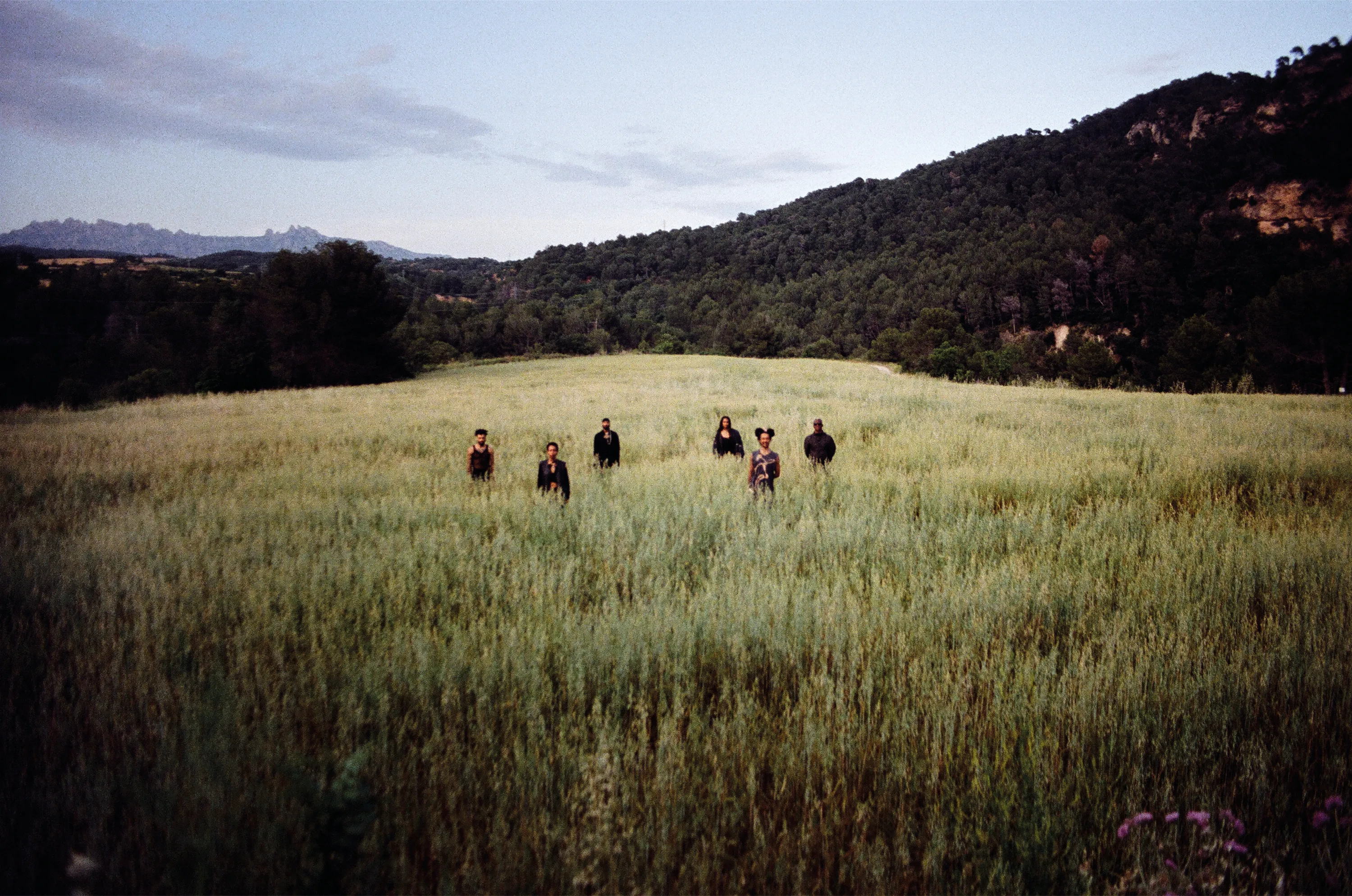
A-side · 33⅓ rpm
ILH·B·01
Playlist 01 · pp. 10–11
Opa Collective on The Colour Blue
Listen on Spotify →
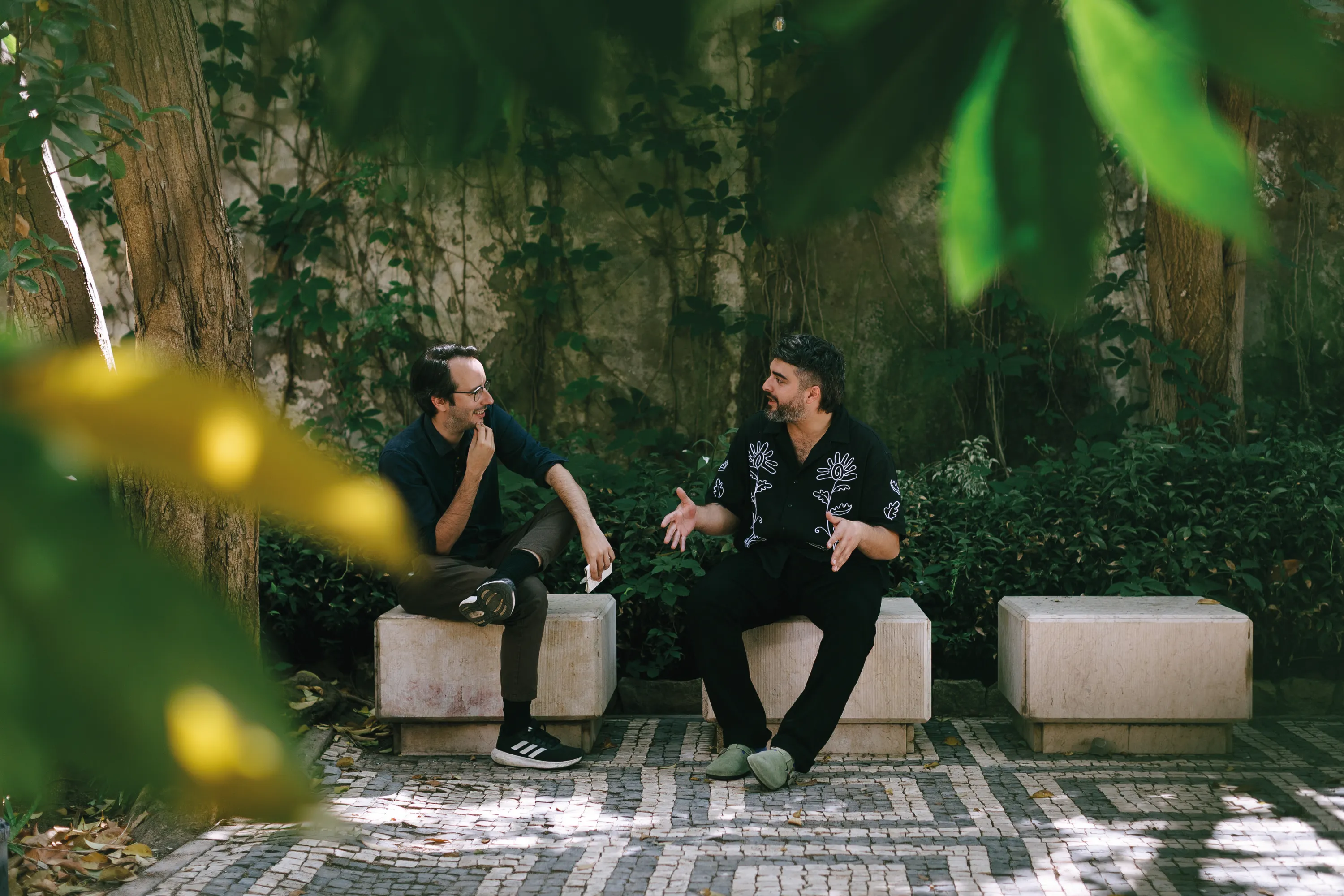
B-side · 33⅓ rpm
ILH·B·02
Playlist 02 · pp. 77–79
Azorean Blues
Listen on Spotify →
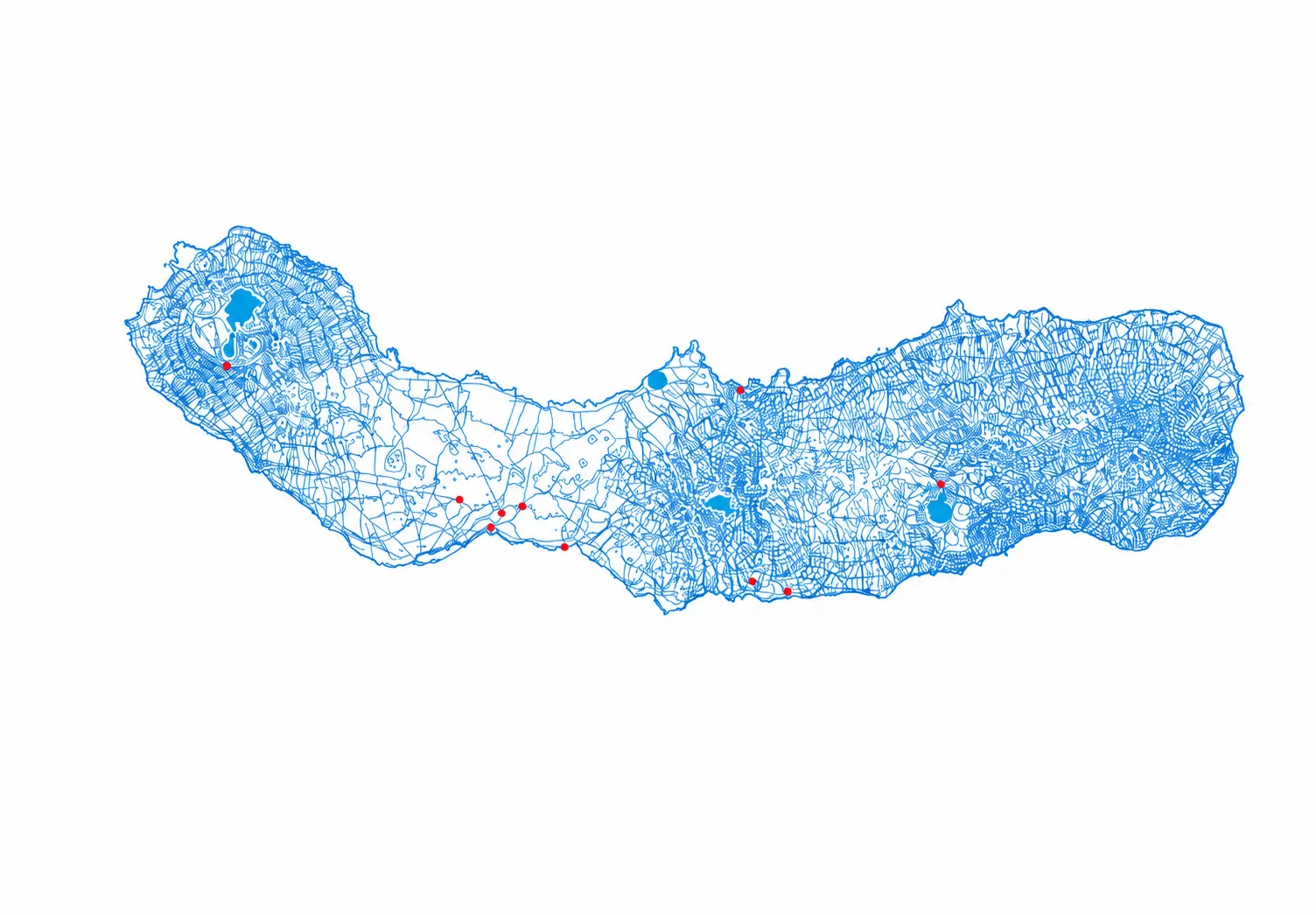
Map · 37°N — 39°N, 25°W — 31°W
pp. 92–93
Ruins of the Azores
By Ilheu Atelier
In the print edition
Comic Strip · p. 112
Out of Control in Ponta Delgada
By Sara Azad
In the print edition
Prose · A Short Story
pp. 114–121
A short story of unravelling in water.
Swimming Pools: Black and Blue
By Kathleen McCaul
In the print edition
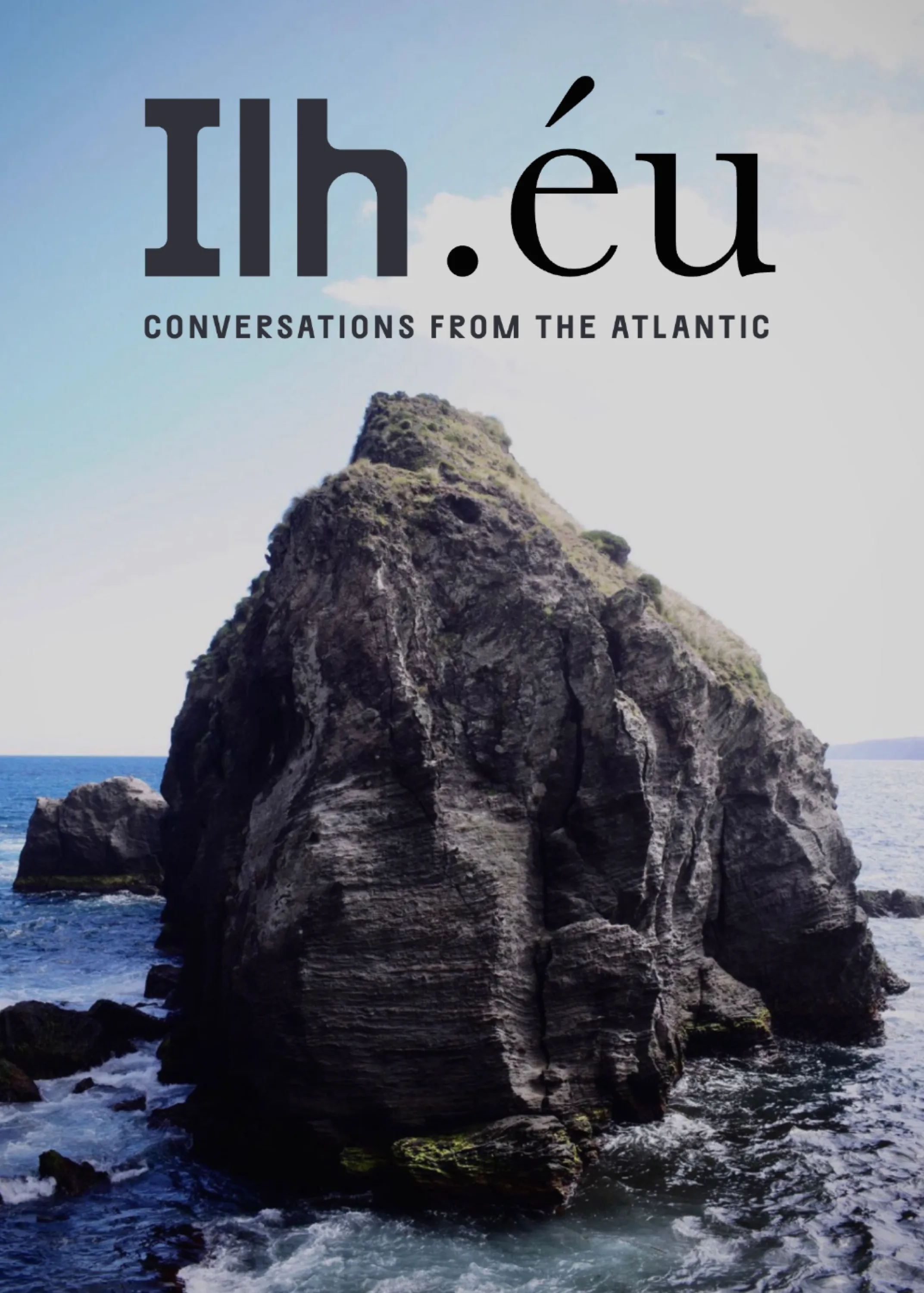
Previously · Issue A · 2024
Azores
Island of Origins. 128 pages on São Miguel. Hugo Gonçales, Pedro Borges, Hun-Chung Lee.
Back-issue enquiries →Limited Print Edition
Get your copy
128 pages of conversations, photography, prose, maps and comics. Printed on Munken Pure 100g at Nova Gráfica, São Miguel.
€15
+ shipping
Worldwide shipping · Secure checkout via Stripe